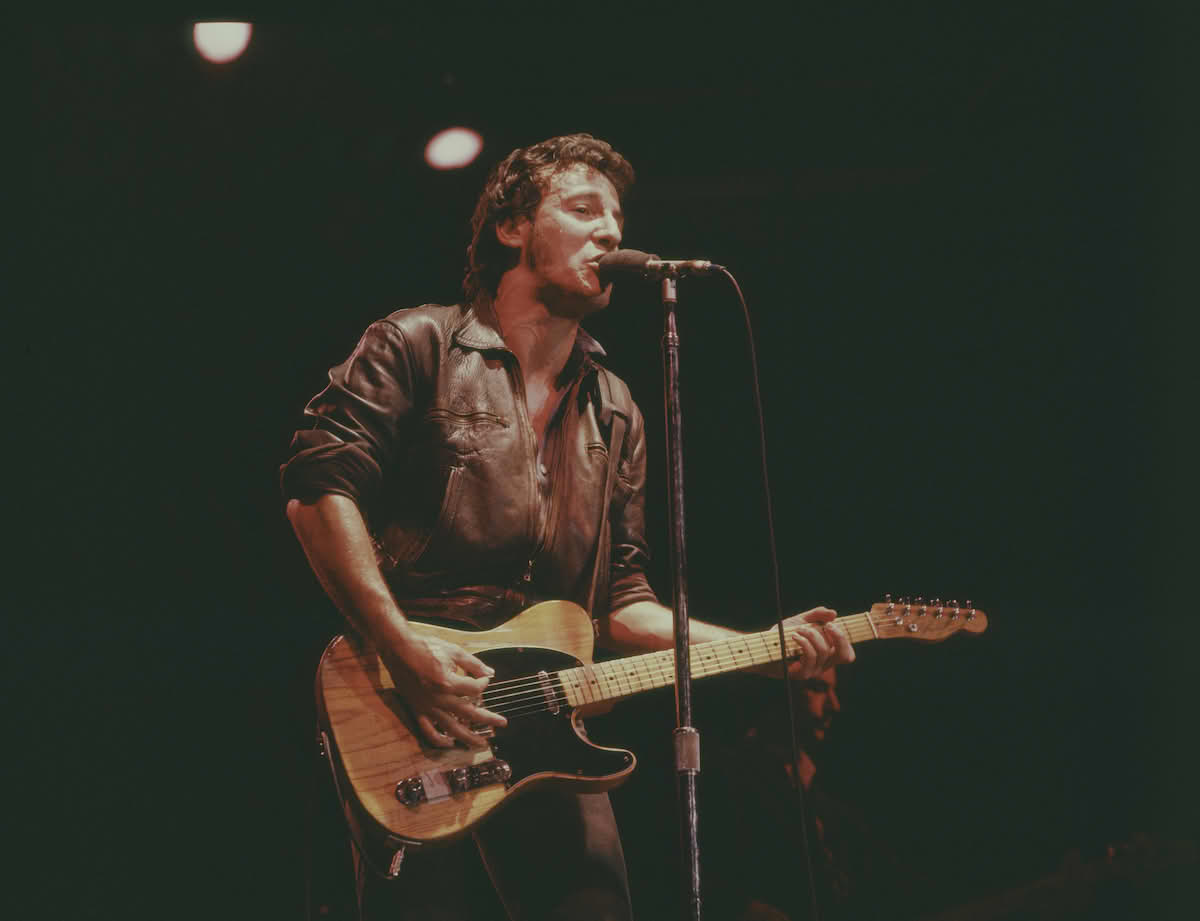
Springsteen: Deliver Me From Nowhere is an introspective biographical drama that focuses on a pivotal yet understated chapter in Bruce Springsteen’s life: the making of his 1982 album Nebraska. Directed and written by Scott Cooper and based on Warren Zanes’ book, the film portrays a man grappling with emotional isolation and creative urgency.
Rather than diving into the lauded “Born to Run” period of fame, the film explores a quieter, darker time of Springsteen’s life. After having commercial success with hits like Hungry Heart, he retreats to a rented house in Colts Neck, New Jersey, in which he records on a modest four-track recorder in his bedroom. The result is Nebraska, an acoustically raw, somber collection of songs that would become one of his most critically acclaimed works to date.
The movie does not dance around Springsteen’s internal struggles: depression, a sense of disconnection from the mainstream music industry, and a distraught relationship with his past. Supporting this is his relationship with his father, played by Stephen Graham, which emerges as deeply consequential and haunting. There is also a fictionalized romantic subplot involving a woman named Faye, played by Odessa Young, which has been heavily debated by critics. Some see it as emotionally moving, while others see it as a convenience to give the film a more conventional structure.
Jeremy Allen White, best known for The Bear, delivers a surprisingly delicate and vulnerable performance. Rather than mimic Springsteen’s stage persona, he captures the reclusive side of the artist, someone struggling with fame and meaning. Jeremy Strong co-stars as Jon Landau, Springsteen’s longtime manager, acting as a steady, pragmatic counterbalance to Bruce’s spiraling inner world, although the script rarely allows him to emerge as a fully realized figure. His character, despite being based on a real person, seemed more like a narrative tool rather than a character with his own arc, especially compared to the complexity given to Springsteen.
The visual language that director Scott Cooper creates favors intimacy over spectacle, with the cinematography often favoring dim, atmospheric lighting and close, lingering shots that press in on Springsteen’s isolation, allowing the viewer to be immersed within the same confined emotional space he occupies. Rather than chasing grandness, the film’s imagery centers around restraint, utilizing shadows, stillness, and texture to punctuate the raw, vulnerable feel of Nebraska. The result is a visual experience made of unembellished honesty and a deep alignment with the album that inspired it.
Springsteen: Deliver Me From Nowhere is not a crowd-pleasing rockstar biopic. It leans more quiet and meditative; more a character study than a career chronicle. Even with its introspective core, the film is exciting and well-balanced, with moments like Springsteen’s creative breakthroughs and musical performances unfolding with an energy that is gripping, curious, and thrilling to watch. For fans of Nebraska or those intrigued by the interior life of an artist facing existential turbulence, it offers a rewarding, engaging, and emotionally textured picture.