Having been a classical musician for 10 years, I have found that music has become a vital aspect of my life. I listen to music daily, making connections between songs and pieces, analyzing elements as the music continues to play: time signatures, pitches, musicality, dynamics. My Spotify playlists are composed of songs from a plethora of genres; however, there is one genre that I believe is losing its creativity: pop. Is pop music even original anymore?
Some musical genres that have historically depended on sampling include rap and hip hop. However, the practice of sampling has become more popular in recent years, specifically within the pop genre.
For instance, the song “Texas Hold ‘em” off Beyoncé’s controversial Grammy-award-winning country album, Cowboy Carter, took social media by storm, as many accused her of sampling the intro song to the children’s television series Franklin. The theory, however, has since been disproved by Beyoncé, but listeners still seem to disagree.
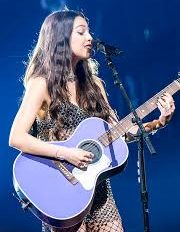
According to WhoSampled.com, Olivia Rodrigo’s song “Good 4 U” off her album SOUR sampled Paramore’s “Misery Business.” Also, in her song “Deja Vu,” she sampled “Cruel Summer” by Taylor Swift. For an artist who claims to write all of her songs, according to an interview with her from NPR, she has clearly taken from other artists.
On Taylor Swift’s latest album, The Life of a Showgirl, many of her songs were sampled. According to “Here’s Every Song Taylor Swift Sampled For ‘The Life Of A Showgirl,’” from Yahoo Entertainment, she sampled “Father Figure” by George Michael in her song “Father Figure,” “White Horse” by Taylor Swift in “Eldest Daughter” (sampled her own song), “It Ain’t Over till it’s Over” by Lenny Kravitz in “Ruin the Friendship,” “Where is My Mind” by the Pixies and “Teenage Dirtbag” by Wheetus in “Actually Romantic,” “I Want You Back” by the Jackson Five in “Wood,” and “Yellow Flicker Beat” by Lorde in “CANCELLED!” While the article suggests that Swift sampled these songs intentionally and made sure to credit each artist, I do think this contributes to a sense of unoriginality in her work.
“Music genres with the most music samples U.S. 2019” from Statista, broke down the share of the top one hundred songs that used music samples in the United States by genre as of 2019: 4% of rock, 10% of dance, 10% of pop, 12% of Latin, 24% of R&B, and 32% of hip-hop. This means that 92% of music within these six genres was sampled.
So, only 8% of music is “made from scratch?” But, this can’t possibly be the case. Right?
In a conversation with Mr. Gibbons, Mendham’s Band Director, he detailed that sampling commonly gets a bad reputation, as it is frequently thought of as stealing other people’s music, but it does not necessarily mean that preexisting music is used to create new music. He mentioned how the implementation of external sounds in music is also considered sampling. For example, Finneas O’Connell, the brother of Billie Eilish, described how they recorded a pedestrian signal at a crosswalk in Australia, and included its percussive sound in Billie Eilish’s “Bad Guy,” which would still count as sampling.
Also, with regard to music technology, Mr. Gibbons added that “every artist has the exact same toolkit nowadays.” Specifically, in the production process, they mostly use Logic Pro or Ableton, which limits their creativity, as they have access to the same production software. This makes it more difficult for them to stand out and create something unique.
Sometimes, when listening to artists’ works, there is a sense of “manufacturing.” What I mean by this is that many musicians find something that works for them and they use that as a template for the rest of their music. Many musicians become constrained to one specific genre. Many do not experiment and evolve to create music that branches into other genres. Mr. Gibbons added that “change for artists can be really healthy if you’re doing the same thing for a really long time.” Even though an artist has found something that works for them, it can be beneficial to branch out.
With this in mind, sampling can actually be used very creatively. Using sounds and noises from everyday life is a brilliant way to add realism and support to a song. Samples can help with rhythmic structures, harmonies, and even create auditory imagery for the story being told through the lyrics. However, I do believe that sampling preexisting songs still has flaws. Though it can be a way to revitalize former works, this recycling may allow the original song to lose its eccentricity and the new song to lose its creativity. Despite this, it does allow for pop music to become more eclectic, as sampling allows artists to develop a unique style from a range of sounds, noises, and musical genres.
However, for the songs that are sampled using preexisting music, is credit given where it is deserved? Mr. Gibbons says that “there is so much below the surface.” When discussing mainstream music, “we’re talking about 1% of artists.” There is so much that goes into a single song: countless hours are spent in the studio with many collaborators—recording artists, producers, lyricists, composers—who each contribute their own expertise into one song.
So, is pop music even original anymore?
If sounds from everyday life are sampled and used creatively, then yes, that is original; however, using preexisting music takes away the idiosyncrasies of both the original and the new song. There is no doubt that most of these critically acclaimed artists have gone through the legal process to acquire the right to sample these works, but there continues to be speculation as to whether credit is being given where it is due, especially for songs that sample lesser-known musicians. When artists win awards, they commonly thank those who have inspired and influenced their music, but many times, sampling goes unnoticed and unrecognized by the general public. So, with this in mind, it is my hope that the next time there is music playing, you listen with a different perspective to acknowledge the music history that lies beneath the melody.