In a region often known for its hostility between neighboring states, recent news from Istanbul highlighted the tense relationship between Pakistan and Afghanistan. Peace talks held between officials from both countries ended without an agreement, with each side blaming the other for the failure. The talks were intended to reduce border tensions and uphold a delicate ceasefire. To understand why relations remain so strained, it is important to examine the roots of conflict between the two nations.
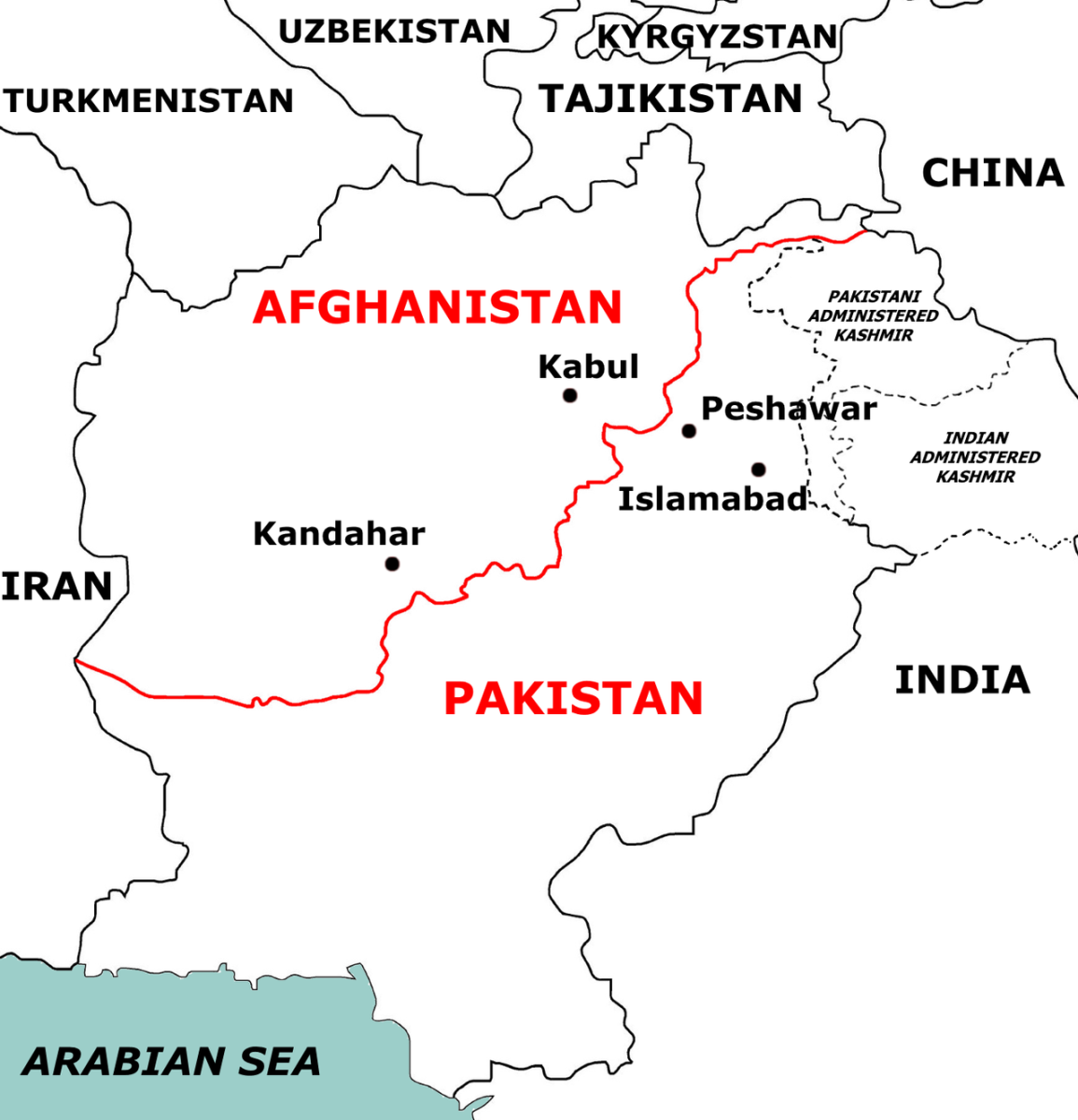
Pakistan and Afghanistan share a long and contested border. In August 1947, the partition of British India led to the creation of Pakistan along Afghanistan’s eastern frontier. That same year, Afghanistan became the only country to vote against Pakistan’s admission into the United Nations. At the heart of this opposition was a territorial dispute over the Durand Line, the border drawn by British colonial authorities that now separates Pakistan and Afghanistan. While most of the international community recognizes the Durand Line as the official border, Afghanistan has historically rejected it, arguing that it was put in place without fair representation.
The Taliban have also challenged the legitimacy of the Durand Line, at times demanding that the border be renegotiated and pushed eastward toward the Indus River, which lies largely within Pakistan. Pakistan has opposed any such changes, as they would result in territorial losses and further complicate regional stability.
Tensions increased further during the late 20th century. In 1979, the Soviet invasion of Afghanistan triggered a refugee crisis, with millions of Afghans fleeing into Pakistan. Pakistan allowed refugees to settle in camps, where militant groups such as the Mujahideen gained influence during the Soviet-Afghan War (1979–1989). After the war ended and Afghanistan was left without a stable central government, the country descended into civil war. Out of this chaos, the Taliban grew and took control of Afghanistan in 1996.
Although the Taliban initially maintained close ties with Pakistan, they refused to recognize the Durand Line, arguing that the fall of the British Raj invalidated colonial-era borders. Taliban rule ended in December 2001 following a U.S.-led invasion, but instability continued. The Taliban eventually regained control of Afghanistan in 2021, once again intensifying tensions with Pakistan.
On November 8, 2025, officials from Pakistan and Afghanistan met in Istanbul, Türkiye, in an attempt to ease border tensions. These talks ultimately failed. The breakdown came amid increasing violence along the Durand Line, including reported drone strikes by Pakistan in August, according to Afghan media. Meanwhile, Pakistan has accused Afghanistan of harboring the Tehrik-e-Taliban Pakistan (TTP), a militant group formed in 2007 that shares roots with the Afghan Taliban and has carried out attacks inside Pakistan.
Although Qatar brokered a temporary ceasefire on October 19, negotiations stalled after Kabul refused to provide written assurances that militant groups would not operate against Pakistan from Afghan territory. Pakistan responded by demanding that TTP members be handed over, stating that no further talks would occur without concrete action. Relations worsened further after Afghanistan’s foreign minister visited India, Pakistan’s regional rival, prompting Pakistan to conduct airstrikes in response.
Statements released by both governments reflected the deadlock. According to the AP News article “Pakistan–Afghanistan peace talks in Istanbul fail amid rising border tensions” by Sajjad Tarakzai, Afghanistan’s government spokesman Zabiullah Mujahid stated, “Pakistan’s demands in the negotiations were unreasonable, and the talks could not proceed, the meeting ended and the talks are at a standstill for now.”
To gain a local perspective, West Morris Mendham High School’s Geopolitics and World History teacher, Ms. Connors, was asked about the conflict. She noted, “If anything, this is going to hurt Afghanistan more than Pakistan. They have more people in their corner … more that would be willing to support them [Pakistan] than Taliban controlled Afghanistan.” She also emphasized the difficulty of assessing Afghanistan’s economy under Taliban rule, explaining that reliable economic data is extremely limited.
Ms. Connors expressed skepticism that the conflict would be fully resolved but said she hoped for progress. She did suggest, “That if they did reopen talks at any point, other nations should start with the Pashtun Tribes [who live along the border], who are most affected by these conflicts between the two nations, and the tribes’ voices should be heard.” As of now there has been no new formal update on information about the situation but The Patriot will continue to monitor the situation if it does develop.