SPOILER ALERT: Spoilers from Zootopia and Zootopia 2 ahead…
The 2016 Disney movie Zootopia tells the story of Judy Hopps, a rookie rabbit police officer, and Nick Wilde, a con artist fox, who partner together to solve a mysterious series of disappearing predators in a modern metropolitan city known as Zootopia. This diverse city is a melting pot composed of predator and prey animals who coexist in districts suitable for their own environmental needs, as seen through semi-aquatic animals residing in Marsh Market, small rodents inhabiting Little Rodentia, and more. Aside from the film’s high-quality story, animation, and character development, Zootopia’s social commentary on prejudice, sexism, and racism towards minorities through its nuanced exploration of these predator and prey relationships, as well as government corruption and bias through Deputy Mayor Bellweather’s political conspiracy, makes it stand out and truly resonate with viewers. Zootopia 2 does not stray from these trends, as seen in its premiere on November 26, 2025. The sequel continues to follow Judy Hopps and Nick Wilde’s partnership as they are now on the run from the Zootopia Police Department and begin working with another unlikely duo.
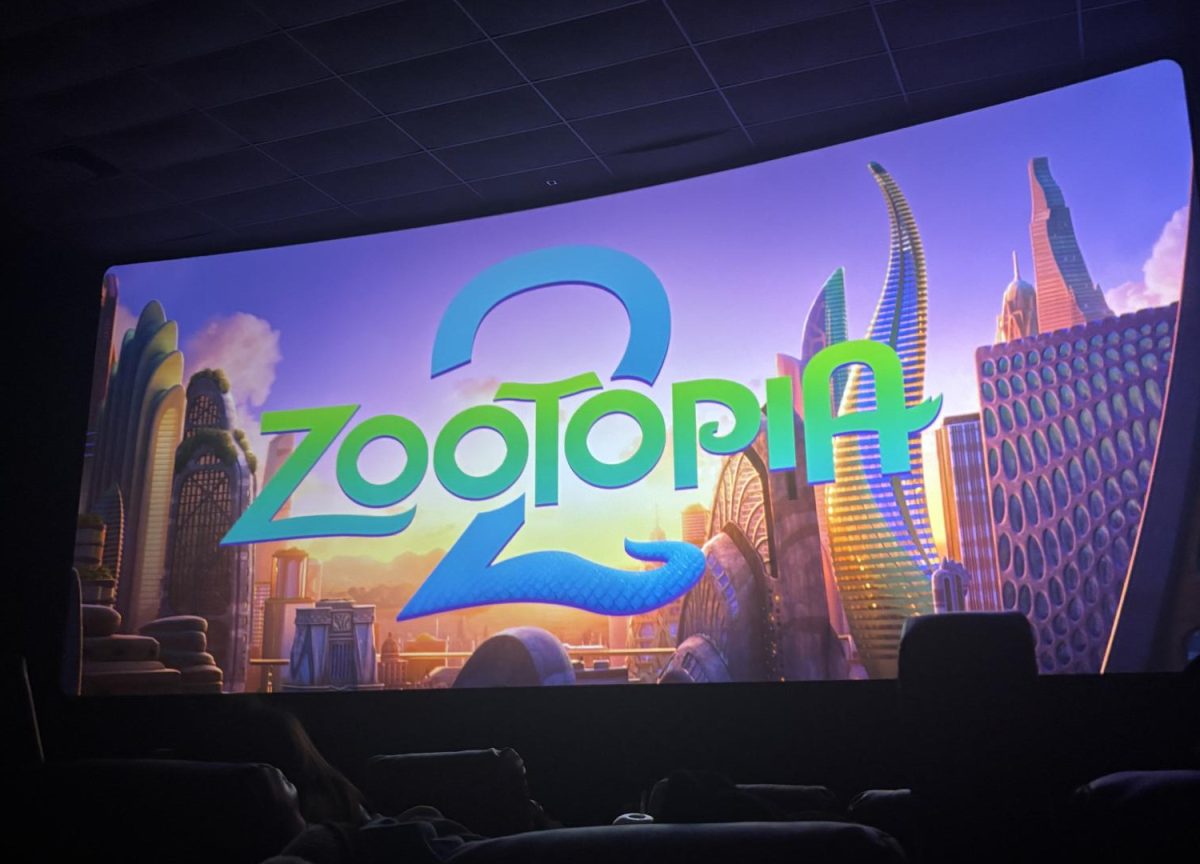
As I walked into the theater with a group of friends, I was shocked to see the audience was mainly composed of viewers our own age, rather than children. However, once I realized that we were the ones who had watched the original Zootopia in theaters when it came out nine years ago, it made more sense that the subtle mature jokes were met with tremendous laughter from the now-teenage audience. Furthermore, this phenomenon also explains why the sequel’s social commentary was more easily understood by this older viewership in contrast to the once elementary-aged fanbase.
Zootopia 2, in the same way as its prequel, explores a wide range of complicated issues in today’s world. From relationship struggles to colonialism, Zootopia 2 makes a social commentary on these issues. The film opens with Judy Hopps and Nick Wilde’s official partnership in the ZPD, which comes with its fair share of troubles. Their reckless and dysfunctional relationship results in Police Chief Bogo sending them to partner counseling after causing mass destruction of Zootopia and its historic landmarks during an unauthorized police chase. Throughout the movie, their relationship develops through its highs and lows, as their fight on the Cliffs of Copenhoofen on their way up to the Honeymoon Lodge results in their sentimental carrot pen being lost and the duo being separated. This heartbreaking series of events truly tore at the heartstrings of many viewers, including my own. At this moment specifically, the full movie theater went dead silent, as we all tried to absorb the devastation felt during this scene. This deep emotional bond to these characters demonstrates how significant an impact the first Zootopia movie had on our childhoods. After another near-death experience in the towers at a weather wall, tension was heightened, in both the film and the theater, with Pawbert’s betrayal, as he leaves Judy and Gary to die. Personally, this scene was one of the most memorable of the entire film, as the intense emotional climax of the chance that the heroes of the story were losing was becoming increasingly possible, so much so that one of my friends was brought to tears. After Nick saves Judy and Gary, the confession scene between the duo might have been my favorite scene thus far in the movie. The resolution of their relationship troubles that have been accumulating over the course of Zootopia 2 was extremely satisfying and completed one of the social commentaries made by the producers. Through this conclusion, the movie taught the audience that open communication and vulnerability are key to a successful relationship, triumphantly accomplishing the conflict of relationship troubles Zootopia sought to tackle.
Regarding its approach to colonialism, the underlying plotline beneath the film itself is the origin story of Reptile Ravine, a land once dedicated to reptile animals before Zootopia’s expansion. In this land lived Agnes De’Snake, Gary’s grandmother, who was the true mastermind behind the weather walls of Zootopia, the climatic devices that allow all animal species to coexist while meeting their individual environmental needs. However, after a small, alleged altercation involving a snake biting a tortoise, all reptile species were stigmatized as violent and dangerous. This justified the mammals’ displacement of all reptiles, as well as the theft of their resources, land, and ideas, including Ebenezer Lynxley’s stealing of Agnes De’Snake’s weather wall idea. In addition, this allowed the Lynxley family to gain status and wealth from generation to generation. The gentrification of Reptile Ravine serves as an allegory for settler colonialism, where the trend of colonizers branding indigenous populations as subhuman threats to take control of their land has been frequently observed throughout human history. As the first movie did, Zootopia 2 recognized the presence of this conflict as well as how it may be resolved. However, this colonialism will be harder to tackle in real life, as our world today is built on these injustices. Even so, Zootopia 2’s exploration of how unbalanced power structures use their influence to exploit marginalized groups reflects the same idea of colonialism throughout our own history.
A review of Zootopia 2 would not be complete without the acknowledgment of what may be my favorite character in the Zootopia universe, Nibbles Maplestick, as well as the overall comedic relief within the film. The complex dissection of societal conflicts, both in the Zootopia universe and our world, must be met with more lighthearted, humorous moments to conserve its title as a children’s movie. It is easy to forget that behind its analytical commentary on global issues lies a colorful storyline filled with animated characters and their unique personalities. A prime example of this can be seen through Nibbles Maplestick, a podcaster and assumed conspiracy theorist who was a strong believer in the historic presence of reptiles in Zootopia. Aside from Nibbles being the genius behind the very basis for Nick and Judy’s earthshattering case, her frequent humorous scenes provided comedic relief, preventing the film from being an animated drama rather than a children’s movie. From breaking Nick and herself out of jail to dropping provocative, suggestive jokes at the right times, Nibbles Maplestick’s character allowed both the children in their audience as well as the teenagers and parents sitting in the seats next to them to enjoy the movie. Beyond Nibbles, a “your mama” joke said by Nick and a scene where Chief Bogo offers Nick a traumatic adulthood are just two examples of the humor throughout the film that continue to develop this same idea.
Overall, I thought Zootopia 2 did a wonderful job at tackling the difficult topic of colonialism while balancing the difficult subject with moments of humor. I found the film equally entertaining, funny, and seriously allegorical of the global issue. Zootopia 2 truly felt like a full-circle moment, as I was reminded of the first time I saw Zootopia nearly a decade ago. I can expect another moment in the coming years as well, as the final scene of the movie featured a bird feather falling across the screen, hinting at a third installment of the Zootopia universe.